• Trust, Education & Writing as Resistance w/ AL KENNEDY - Highlights
    Mar 3 2026

    "The thing that puzzled him was why people don't agree to be fully expressed while they're alive. Why does it only happen in their last moment? Why wouldn't you live being fully expressed?"

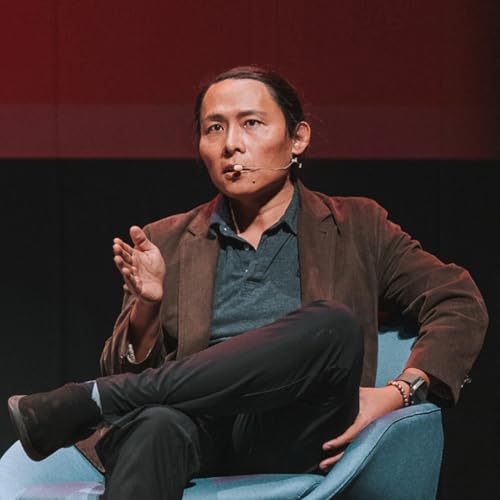
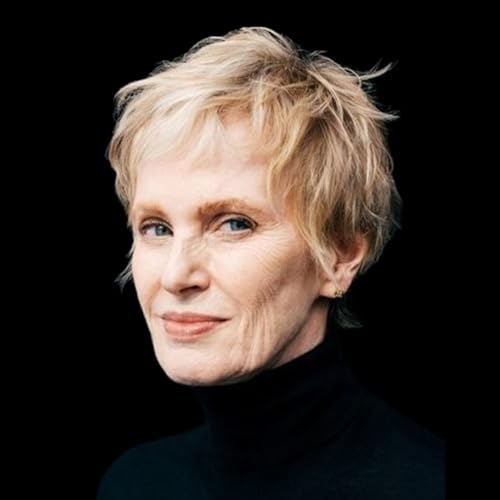
    My guest today is AL Kennedy. She is one of Britain’s most acclaimed and versatile literary voices, a writer who can inhabit the internal life of a soldier in a POW camp, as she did in her Costa Book Award-winning novel Day, as easily as she can navigate the "professional lying" of a modern civil servant.

    Her latest novel, Alive in the Merciful Country, takes place during the 2020 lockdown. It tells the story of a primary school teacher who receives a confession from an undercover police officer who infiltrated her life decades earlier. It’s a provocative investigation into state power, the "Spy Cops" scandal and the search for mercy in an age of surveillance. It’s a book about the breakdown of trust. We talk about her life, her activism, and why she believes fiction is the only way to tell the truth when the facts are forbidden and how she balances the truth of her novels with the relief of stand-up comedy.

    (0:00) Finding Your Voice

    On the Alfred Wolfsohn voice method and the power of being fully expressed

    (2:30) Reading from Alive in the Merciful Country

    Kennedy shares a passage from her latest novel, exploring hope and resilience in dark times.

    (4:43) The Myth of Shrinking Attention Spans

    Challenging the narrative that modern audiences cannot focus, and the importance of engaging storytelling.

    (6:22) Education and the Foundation of Democracy

    The dangers of dismantling education and how critical thinking protects us from fascism.

    (10:26) The Spy Cop Scandal and State Surveillance

    Unpacking the reality of undercover police infiltrating peaceful protests and intimate lives.

    (13:59) Lockdown: A Global Pause and the Inrush of Empathy

    The fleeting moment of unified humanity during the pandemic and how it was ultimately betrayed.

    (17:34) Writing Without Theft: The Ethics of Character Creation

    Kennedy explains her imaginative process and why she refuses to steal details from real people's lives.

    (28:16) AI, Digital Slop, and the Loss of Trust

    Reflections on artificial intelligence as an unstable plagiarism machine and its impact on truth.

    (30:03) Nature, Spirituality, and the Merciful Country

    Finding healing in the natural world and navigating the future with love and awareness.

    Episode Website

    www.creativeprocess.info/pod

    Instagram:@creativeprocesspodcast

    Voir plus Voir moins
    34 min
  • The Art of Fiction, Democracy & Truth with AL KENNEDY
    Mar 3 2026

    What happens when the state infiltrates your most intimate relationships? How do we protect the innocence and imagination of children in an increasingly authoritarian world? “"If you have love, eventually you're going to win. It's not that people aren't going to die. It's not terrible things aren't going to happen. But if you stay with that and you stay centered in that, you'll get through and you will not have turned into a monster in order to overcome monsters.”

    My guest today is AL Kennedy. She is one of Britain’s most acclaimed and versatile literary voices, a writer who can inhabit the internal life of a soldier in a POW camp, as she did in her Costa Book Award-winning novel Day, as easily as she can navigate the "professional lying" of a modern civil servant.

    Her latest novel, Alive in the Merciful Country, takes place during the 2020 lockdown. It tells the story of a primary school teacher who receives a confession from an undercover police officer who infiltrated her life decades earlier. It’s a provocative investigation into state power, the "Spy Cops" scandal and the search for mercy in an age of surveillance. It’s a book about the breakdown of trust. We talk about her life, her activism, and why she believes fiction is the only way to tell the truth when the facts are forbidden and how she balances the truth of her novels with the relief of stand-up comedy.

    (0:00) Finding Your Voice
    On the Alfred Wolfsohn voice method and the power of being fully expressed

    (2:17) Education and the Foundation of Democracy
    The dangers of dismantling education and how critical thinking protects us from fascism.

    (5:14) The Myth of Shrinking Attention Spans
    Challenging the narrative that modern audiences cannot focus, and the importance of engaging storytelling.

    (8:23) Reading from Alive in the Merciful Country
    Kennedy shares a passage from her latest novel, exploring hope and resilience in dark times.

    (17:45) The Spy Cop Scandal and State Surveillance
    Unpacking the reality of undercover police infiltrating peaceful protests and intimate lives.

    (22:07) AI, Digital Slop, and the Loss of Trust
    Reflections on artificial intelligence as an unstable plagiarism machine and its impact on truth.

    (28:29) The Power of the Powerless: Radical Whimsy
    How absurdity, humor, and inflatable costumes can disrupt authoritarian mindsets and potential violence.

    (33:13) Lockdown: A Global Pause and the Inrush of Empathy
    The fleeting moment of unified humanity during the pandemic and how it was ultimately betrayed.

    (42:53) Writing Without Theft: The Ethics of Character Creation
    Kennedy explains her imaginative process and why she refuses to steal details from real people's lives.

    (1:29:40) Nature, Spirituality, and the Merciful Country
    Finding healing in the natural world and navigating the future with love and awareness.

    Episode Website

    www.creativeprocess.info/pod

    Instagram:@creativeprocesspodcast

    Voir plus Voir moins
    1 h et 36 min
  • SIRI HUSTVEDT on Love, Grief & the Future of Democracy
    Feb 23 2026

    “Grief happens because you don't stop loving the person who died. The person doesn't exist in your reality anymore. The everyday is not colored and shaped by this other human being, but you don't stop loving the person. So grief is a particular kind of unrequited love. And probably without that dynamic relationship with this person, I would be someone else. And he would've been someone else. I mean, Paul died before me. But we were, I think, hugely important to the drama of becoming in our own lives.”

    Today, we are honored to welcome a writer whose work has long explored the intimate landscapes of the mind, memory and the heart. Siri Hustvedt’s writing moves between the personal and the philosophical, the literary and the deeply human. Her work bridges collections of essays, non-fiction, poetry, and seven novels, including the international bestsellers What I Loved and The Summer Without Men. Recipient of the Princess of Asturias Award for Literature and the Gabarron Prize for Thought, her work has been translated into over thirty languages. Her new memoir, Ghost Stories, is a reflection on forty-three years shared with her late husband, the writer and filmmaker Paul Auster. In its pages, we encounter not only love and loss, but the quiet persistence of presence, memory, and language itself.

    (0:00) Grief as Unrequited Love

    Siri explores the emotional reality of living without Paul Auster, noting that grief occurs because love does not stop when a person dies.

    (4:00) Facing Death with Courage

    The importance of not hiding from mortality and how discussing end-of-life wishes offered a necessary perspective.

    (12:37) Reading from Ghost Stories

    Siri reads the opening passage of her memoir, detailing how the loss of her husband deranged her sense of time and bodily rhythms.

    (18:41) The Phantom Limb: ” The beloved is taken away and it feels as if you're amputated or gutted.”

    (21:50)  Grandfather, Father and Son: Generational Traumas Behind Paul Auster's Writing

    (24:11)  How Powerful Emotions and a Person's Life Can Play a Role in Illness

    (30:09) Feeding the Earth

    "Paul very pointedly told me that he wanted to be buried in the Jewish mode. And the phrase he used was, “I want my body to feed the earth.”

    (44:23) Physical Love in Marriage

    On the importance of physical intimacy in long-term marriages, a reality often left out of grief memoirs.

    (54:00) The Philosophy of the Between

    How relational existence is foundational to life.

    (1:00:16) The Hubris of Controlling Nature

    (1:12:00) The Dark History of Statistics

    (1:32:12) The Art of Learning vs. AI and Automated Outcomes

    “I think we have to ask ourselves, what is education? What do we want from it? How do we want people to learn?

    Episode Website

    www.creativeprocess.info/pod

    Instagram:@creativeprocesspodcast

    Voir plus Voir moins
    1 h et 38 min
  • Who Are We? What Makes Us Care? Jim Shepard, Neil Patrick Harris, John Patrick Shanley & Artists Share Their Stories
    Feb 11 2026

    Can curiosity and empathy be taught? How can we expand our sense of solidarity through stories? In this episode, we explore the internal dialogues of artists, actors and writers to ask what it means to step into someone else's shoes.

    (0:00) Novelist Jim Shepard discusses Literature as a Tool for Emotional Education and Exploring History

    (2:05) Tony Award-winning Actor Neil Patrick Harris on Being Moved by Theater and its Ability to Bridge Worlds

    (3:55) Novelist Katie Kitamura on How a Book is Made in Collaboration with the Reader

    (5:00) Screenwriter, Playwright Laura Eason on Inhabiting the Hearts of Characters Different from Ourselves

    (6:03) Academy Award-winning Director Sharmeen Obaid-Chinoy on the Art of Visual Storytelling

    (6:37) Cinematographer, Director Benoit Delhomme on the Freedom of Handheld Cinematography

    (7:19) Author Etgar Keret on Looking for Humanity through Shared Intention

    (8:18) Viet Thanh Nguyen – Opposing Power through Expansive Solidarity

    (9:27) Adam Moss – Author, Fmr. Editor New York magazine on “The Work of Art”

    (10:29) John Patrick Shanley – Tony & Academy Award-winning Writer, Director on Finding Value in Ordinary Experiences and the Creative Power of Daydreaming

    (11:56) Pulitzer Prize-winning Journalist Nicholas Kristof on Why Individual Stories are Necessary to Generate Connection

    To hear more from each guest, listen to their full interviews.

    Episode Website

    www.creativeprocess.info/pod

    Instagram:@creativeprocesspodcast

    Voir plus Voir moins
    14 min
  • The Wisdom of Nature: Artists & Scientists on The Beauty & Fragility of Our Planet
    Jan 9 2026

    In this special edition, we hear from our guests from across the arts and sciences. From composers and poets to forest ecologists and climate envoys, they tell the story of our planet. Moving beyond the data of destruction, we explore the intelligence of nature, the ethics of what we eat, and the empathy required to save our future.

    MAX RICHTER, Composer, Sleep, The Blue Notebooks

    CARL SAFINA, Author, Becoming Wild

    ADA LIMÓN, 24th US Poet Laureate

    CYNTHIA DANIELS, Grammy Award-winning Sound Eng.

    SUZANNE SIMARD, Finding the Mother Tree

    JOELLE GERGIS, Lead Author, IPCC 6th Assessment Rpt

    NOAH WILSON-RICH, CEO, Best Bees Company

    INGRID NEWKIRK, PETA Founder

    BERTRAND PICCARD, Solar Impulse Foundation

    DAVID FARRIER, Author, Footprints

    KATHLEEN ROGERS, Pres, Earth Day Network

    ODED GALOR, Unified Growth Theory

    PETER SINGER, Philosopher

    GEOFF MULGAN, Another World Is Possible

    CLAIRE POTTER, Welcome to the Circular Economy

    CHRIS FUNK, Dir. Climate Hazards Car.

    JENNIFER MORGAN, Special Envoy, International Climate Action

    To hear more from each guest, listen to their full interviews.

    Episode Website

    Voir plus Voir moins
    18 min
  • The Musician Who Sings to Animals - PLUMES on Trust & Cross-Species Communication - Highlights
    Dec 31 2025

    On Music, Trust and Connection with the Animal World

    “Mostly I’ll play in a minor key, something sad, which I think can work for an animal because they can sense the sadness, and they try to reassure me and comfort me. I chose love songs because I'm convinced they are very intuitive and they can sense what I am trying to say to them, and profess my love in a way. I think there's always a way to connect, and if you're being cautious and don't threaten the animals, something beautiful can happen.”

    Musician Plumes takes his guitar to the world's most unlikely concert halls—farms, sanctuaries, and wild habitats. A passionate advocate for veganism and animal welfare, we discuss what animals hear, how trust forms, and what music can reveal when it enters a world not made for humans alone.

    Episode Website

    www.creativeprocess.info/pod

    Instagram:@creativeprocesspodcast
    Voir plus Voir moins
    Moins d'une minute
  • Animals & The Healing Power of Music
    Dec 31 2025

    How is music a pathway to understanding animals?

    Musician Plumestakes his guitar to the world's most unlikely concert halls—farms, sanctuaries, and wild habitats. A passionate advocate for veganism and animal welfare, we discuss what animals hear, how trust forms, and what music can reveal when it enters a world not made for humans alone.

    “Mostly I’ll play in a minor key, something sad, which I think can work for an animal because they can sense the sadness, and they try to reassure me and comfort me. I chose love songs because I'm convinced they are very intuitive and they can sense what I am trying to say to them, and profess my love in a way. I think there's always a way to connect, and if you're being cautious and don't threaten the animals, something beautiful can happen.”

    Episode Website

    www.creativeprocess.info/pod

    Instagram:@creativeprocesspodcast

    Voir plus Voir moins
    41 min
  • Speaking Out of Place - DAVID PALUMBO-LIU on Reclaiming Our Political Voices - Highlights
    Dec 27 2025

    On the urgent need to reclaim our political voices, the forces that silence dissent, and how art and poetry are crucial tools for survival

    Our guest today is an activist scholar who believes the classroom is inseparable from the public square. David Palumbo-Liu is the Louise Hewlett Nixon Professor of Comparative Literature at Stanford University and a founding faculty member of Stanford’s Program in Comparative Studies in Race and Ethnicity. But his work has long reached beyond the academy. Through his book, Speaking Out of Place: Getting Our Political Voices Back, and his podcast of the same name, he insists that the great global crises of our time—from escalating wars and democratic failures to environmental collapse—are fundamentally crises of value and voice. His recent work has put him on the front lines of campus activism, challenging institutions, resigning his membership from the MLA, a move that highlights the ethical cost of speaking truth to power. We’ll talk about what he calls the "carceral logic" of the modern university, why art and poetry are crucial tools for survival in times of war, and what he tells his students about preparing for a future defined by uncertainty. His perspective is rooted in literature, but his urgency is all about the world we live in now. We will discuss the forces that silence dissent, the "imperial logic" of AI, and what it means to be a moral, active citizen when the systems we rely on are failing.

    “There is a dispute about what the American Dream is or how it would play out in different circumstances. The American dream has essentially been narrowed into a white Christian nationalist notion of things so that everything that falls outside what they imagine that to be is not only undesirable, but should be the subject of extermination, deportation, and detention. I am heartened by the fact that more of our 'better angels' are emerging with a more capacious and expansive notion of what the American dream could be.”

    Episode Website

    www.creativeprocess.info/pod

    Instagram:@creativeprocesspodcast

    Voir plus Voir moins
    12 min